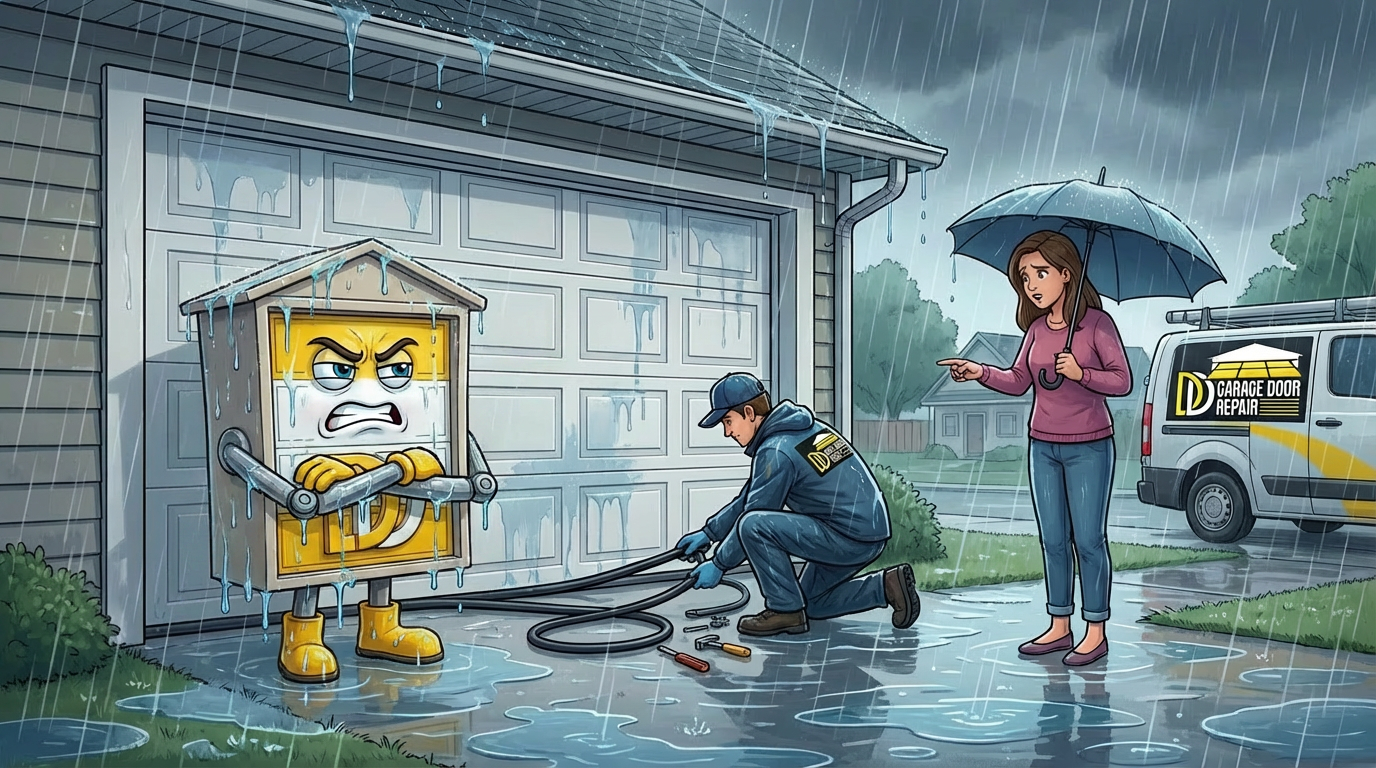
Coquitlam’s spring rainstorms are a specific kind of trouble for garage doors. Unlike the steady coastal drizzle in Vancouver or the marine fog in Surrey, Coquitlam gets the full drainage load off the north slopes — Westwood Plateau, Burke Mountain, Eagle Ridge — funnelled down hillside streets and into driveways that often sit below grade. Add in the creeks threading through Coquitlam Centre and Maillardville, and you have a perfect recipe for water finding its way into garages that were fine all winter.
If you’ve noticed a musty smell, damp concrete, or small puddles just inside your garage door this spring, the door itself is probably not sealing properly anymore. Here’s where that water is coming from, and what to do about it.
Why Coquitlam’s Spring Rain Is Different
Three things conspire to make spring rain especially hard on Coquitlam garage doors:
- Hillside runoff. Homes on Burke Mountain, Westwood Plateau, and Eagle Ridge sit in drainage paths. When rain hits saturated ground upslope, it has to go somewhere — often across your driveway.
- Below-grade garages. Many Coquitlam homes have garages that sit slightly below the street level, meaning water runs toward the door instead of away from it.
- Prolonged wet cycles. Spring in Coquitlam often means three or four days of steady rain in a row. Weather seals that were “mostly fine” all winter finally give up.
The result: water finds gaps that didn’t exist six months ago, and those gaps get worse as the seal material ages.
The 6 Common Water Entry Points
1. The Bottom Astragal Seal
This is the big rubber seal on the bottom edge of the door that compresses against the concrete when the door closes. It’s the first line of defence and the most common failure point. Over 5–7 years of Coquitlam weather it goes brittle, develops cracks, flattens out, or splits along the retainer.
How to check: Close the door. Lie down outside and look under the bottom edge. You should see no light, no gaps. If you can slide a piece of paper under anywhere, the seal has failed.
Fix: Replace the astragal seal. A new one slides into the existing aluminum retainer on the bottom of the door. Universal seals cost $30–$60 and take about 20 minutes to install. Make sure the new seal matches your retainer profile — T-style, bulb, or P-style.
2. The Side Weatherstripping
Running up both vertical edges of the door is a flexible vinyl or rubber strip that seals the gap between the door panels and the jamb. On Coquitlam homes exposed to west-facing weather, this side stripping takes a beating and often peels or cracks near the bottom where rain pools.
How to check: Run your hand along the stripping from bottom to top. It should be flexible and firmly attached to the jamb. Any gaps, cracks, or lifted sections are letting water in.
Fix: New side weatherstripping is sold in continuous strips and nailed or screwed to the jamb. It’s a straightforward DIY job with a hammer and a utility knife.
3. The Top Header Seal
Easy to forget. The top of the door needs a horizontal seal, just like the sides, to close the gap where the top panel meets the header. Many older Coquitlam homes never had one installed in the first place.
How to check: Look at the top of the door from inside. You should see a continuous rubber or vinyl strip pressing down on the top panel when the door is closed. If there’s a visible gap or the strip is missing entirely, rain will drive in during storms.
Fix: Install a header seal. Same family of products as side weatherstripping. Inexpensive, big impact.
4. A Damaged or Warped Bottom Panel
If your bottom panel has been hit by a car, lawn mower, or simply swelled from years of moisture absorption, it might not sit flat against the concrete anymore. When that happens, the astragal seal can’t compress evenly and water sneaks through at the low spot.
How to check: With the door closed, look at the bottom edge from outside. Is the door sitting straight, or is one end lower than the other? Any visible bend, dent, or warp?
Fix: Depending on the damage, you may be able to straighten a dented panel or install a larger-profile astragal seal to bridge the gap. Severely warped panels may need replacement — this is a technician call.
5. Driveway Grading Issues
Sometimes the door is sealing perfectly and water is still getting in — because the driveway is sloped toward the garage. Newer homes in Burke Mountain and parts of Westwood Plateau occasionally suffer from settling that tilts the approach toward the door.
How to check: During the next rainstorm, watch where water pools on your driveway. If it’s heading toward the door, you have a grading issue.
Fix: This is not a garage door fix. Options include a threshold seal (a flexible ramp that glues to the concrete and diverts water), a driveway trench drain, or regrading. Threshold seals are the easiest DIY option and cost $60–$150 for a standard 16-foot door.
6. Cracked Concrete or Settled Floor
Older Coquitlam homes sometimes develop cracks in the garage slab that allow groundwater to push up during heavy rain. This isn’t technically a door issue, but it shows up as “water in the garage after a storm.”
How to check: Inspect the garage floor near the door for visible cracks, discoloration, or efflorescence (white mineral streaks).
Fix: Minor cracks can be sealed with a concrete crack filler. Major cracks or persistent upward water suggest drainage issues around the foundation — get a foundation specialist to look at it.
Reference: Seal Types at a Glance
| Seal type | Location | Typical cost | Lifespan in Coquitlam |
|---|---|---|---|
| Bottom astragal (T-style) | Door bottom | $30–$60 | 5–7 years |
| Bottom astragal (bulb-style) | Door bottom | $40–$80 | 6–8 years |
| Side weatherstripping | Door jambs | $25–$50 per side | 7–10 years |
| Header seal | Door header | $20–$40 | 7–10 years |
| Threshold seal | Concrete floor | $60–$150 | 10+ years |
Signs You Already Have Water Damage
Even if you haven’t seen actual puddles, Coquitlam homeowners should watch for these early warning signs that water is getting in:
- Musty smell in the garage, especially after rain
- Efflorescence (white chalky streaks) on the concrete near the door
- Rust staining on the bottom of the door panels or the tracks
- Swollen or peeling drywall along the garage walls
- Mould spots on stored cardboard or insulation
Catching these signs early usually means a $50 fix. Ignoring them for a year or two leads to framing rot, mould remediation, and thousands in repairs.
When to Call a Professional
DIY all of the above seal replacements if you’re comfortable with basic tools. Call a technician if:
- Your bottom panel is visibly damaged or warped
- The door isn’t closing fully or squarely
- You’ve replaced the seals and water is still coming in
- You notice structural rot around the door frame
These point to bigger problems than a $40 seal can solve.
Bottom Line
Most spring water intrusion in Coquitlam garages traces back to a failed bottom seal or missing weatherstripping — parts that cost under $100 and install in under an hour. Catch the problem early, replace the seals when they get brittle, and keep an eye on how water flows on your driveway during storms.
If you’re not sure what’s failing, we can come out and do a quick garage door maintenance and weather-seal assessment across Coquitlam, Port Coquitlam, and the Tri-Cities area. Book a visit and we’ll tell you exactly what needs replacing and what’s still good. For panel damage or structural issues, we also handle garage door repair same-day in the Tri-Cities.