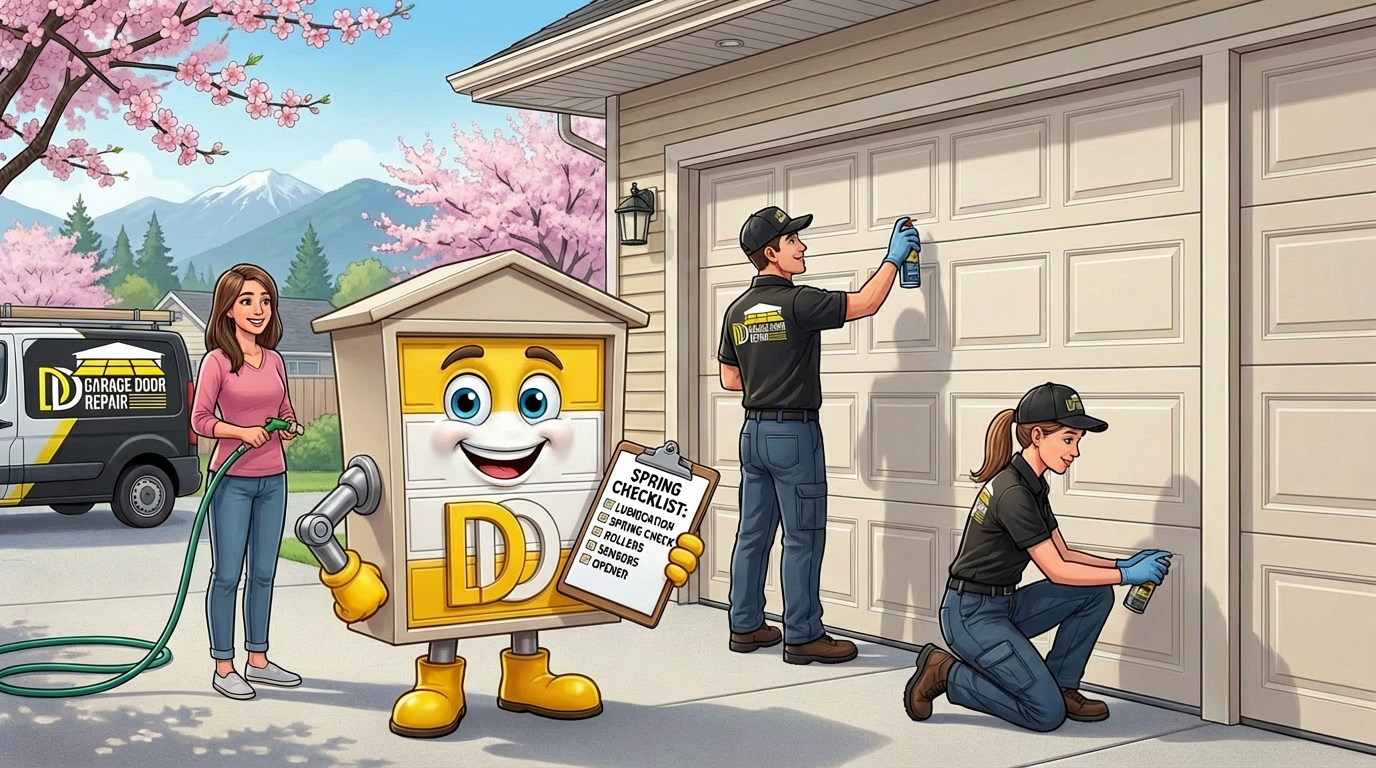
Spring is the single best time of year to maintain a garage door in Surrey. Winter’s rain, salt spray from treated roads, and freeze-thaw cycles leave residue on tracks, strip lubrication from springs, and expose small problems you’d rather catch before they turn into $600 repair calls in July. Spend a couple of hours on maintenance now, and your door will be quieter, safer, and noticeably more reliable through the busy summer months.
This is the same checklist we walk through on our annual maintenance visits across Surrey, Cloverdale, South Surrey, and Newton. Most of it you can handle yourself with a step ladder, a damp cloth, and the right lubricant.
Why Spring Matters in Surrey Specifically
Surrey homeowners deal with a few microclimates in one city. Properties near the Nicomekl and Serpentine rivers get heavy fog and an extended wet season. Homes on the south slope toward White Rock take more direct ocean air. Homes east toward Langley see more pronounced temperature swings. All of these conditions hit a garage door from different angles, and most of the damage is invisible until something fails.
The other reason spring wins: hardware stores are fully stocked with what you need, the weather is mild enough to work with the door open, and if you find something broken, technician schedules still have room. Try booking a same-day spring repair in July and you’ll see what we mean.
The 10-Step Spring Maintenance Checklist
1. Visually Inspect the Door and Hardware
Start by pulling your car out and closing the door. Step back and look at the whole face of it. Are the panels aligned? Any rust bleed, dents, or water stains? Open and close the door while watching the hinges, rollers, and springs. Listen for new noises — grinding, popping, scraping — and note where they come from.
What you’re looking for: loose bolts, visible rust on the springs or cables, cracked rollers, bent hinges, and panels that shift out of alignment as the door travels.
2. Tighten Loose Hardware
A garage door opens and closes roughly 1,500 times per year, and every one of those cycles creates vibration. Hinges, roller brackets, track brackets, and lift cable mounts can all work themselves loose. Grab a socket set and snug everything up — don’t crank on the bolts, just firm them up.
Do not touch the spring or spring bracket bolts. That’s a technician-only zone.
3. Clean the Tracks
Wipe the inside of both vertical tracks with a damp cloth. You’ll be surprised what comes off — a winter’s worth of grit, leaves, spiderwebs, and salt residue. Dirty tracks are the number-one cause of rollers skipping or binding.
Do not grease the tracks. Rollers need to roll freely, not slide through lubricant. Grease attracts more dirt and makes the problem worse.
4. Lubricate the Moving Parts
This is the single highest-impact step on the list. Use a proper garage door lubricant — white lithium grease or a silicone-based spray designed for garage doors. Do not use WD-40. WD-40 is a solvent, not a lubricant, and it will actively strip existing grease from your door.
Apply to:
- Hinges
- Roller bearings (not the nylon wheels themselves)
- Torsion springs (a light, even coat)
- The opener rail if you have a chain or screw drive
- End bearing plates
5. Test the Balance
Disconnect the opener by pulling the red emergency release cord. Lift the door manually to about waist height and let go. A properly balanced door will stay put, or drift slowly. If it slams down or flies up, your springs are out of adjustment. Do not try to fix this yourself — call a technician. Torsion springs hold enough stored energy to cause serious injury.
6. Test the Auto-Reverse and Photo Eye
Place a 2x4 flat on the ground in the door’s path and close the door. It must reverse on contact. Then wave a broom handle through the photo eye beam while closing — the door must stop and reverse. These are code-mandated safety features and they save lives. Test them every month, not just in spring.
7. Clean and Replace the Weather Seal
Surrey winters destroy rubber weather seals. Pull the bottom astragal seal out of its retainer and check it for cracks or flattening. If it’s torn or no longer compressing when the door closes, it’s past due. Replacement seals run $30–$60 and slide into the existing retainer in about 15 minutes.
8. Clean and Lubricate the Opener
Wipe down the opener casing and vacuum dust out of the motor vents. If you have a chain drive, wipe and re-grease the chain. Belt drives don’t need lubrication. Test that the manual release works smoothly — if it’s stiff, that’s a problem you want to know about before the next power outage.
9. Inspect the Lift Cables
Look at the lift cables where they attach to the bottom bracket and where they wrap around the cable drum at the top. Frayed strands, rust, or a “bird’s nest” of loose wire means the cable is failing and needs professional replacement before it snaps. Do not operate the door with a damaged cable — when one goes, the other follows, and the door can drop hard.
10. Change the Opener and Remote Batteries
Most modern openers have a battery backup. Replace it every 2 to 3 years — spring is an easy reminder. While you’re there, swap the batteries in your remotes and your keypad. Nothing ruins a long weekend like a dead keypad at 11 PM.
DIY Task Reference
| Task | Frequency | Time | Cost |
|---|---|---|---|
| Visual inspection | Monthly | 5 min | Free |
| Lubrication | Twice yearly | 20 min | $15 lubricant |
| Tighten hardware | Twice yearly | 15 min | Free |
| Balance test | Yearly | 2 min | Free |
| Auto-reverse test | Monthly | 2 min | Free |
| Weather seal replacement | Every 3–5 years | 20 min | $30–$60 |
| Spring or cable service | Technician only | — | $150–$350 |
Common Issues We See in Surrey Homes
On Surrey maintenance visits, the three issues we find most often are:
- Dried-out torsion springs. Surrey winters strip factory lubrication. Dry springs squeal, age faster, and put extra stress on the opener.
- Loose roller brackets. Especially on doors over 10 years old. Easy to fix, but nobody checks.
- Cracked bottom weather seals. Very common on doors facing west and taking the brunt of the rain. They let water in and make the garage floor damp all summer.
Most of these are 10-minute fixes when caught early, and hundreds of dollars when they’re not.
When to Call a Professional
Some parts of a garage door are genuinely dangerous. Call a technician immediately if you find:
- A broken or visibly damaged torsion or extension spring
- Frayed or snapped cables
- A door that won’t stay open in manual mode
- The door suddenly feeling very heavy
- Any bent or kinked track sections
These are not DIY repairs. Every year, garage door injuries send people to emergency rooms in the Lower Mainland — usually from someone trying to adjust a torsion spring without the right tools.
Wrap-Up
Thirty minutes of spring maintenance can easily save you hundreds of dollars and spare you from being locked out of your garage in the middle of a summer heatwave. Run the checklist once now, put it on your calendar for early fall, and your door will last longer and work better with almost no effort.
If your last professional service was more than two years ago, or if you’ve ticked any of the red flags above, we offer flat-rate garage door maintenance visits across Surrey and the Lower Mainland. Book a visit or call us directly — our phone answers 24/7. If you find a broken spring or cable during your inspection, we also handle same-day spring and cable repair.